
The Bank Exam Cycle Just Doubled. The Risk Test Did Not.
Federal banking regulators doubled the asset threshold for a longer exam cycle, but capital, management, and supervisory gates still decide who qualifies.

Founder of Lead-Lag Media and Publisher of The Lead-Lag Report. Five-time Dow & Founders Award winner. Host of the Lead-Lag Live podcast.
Federal banking regulators doubled the asset threshold for a longer exam cycle, but capital, management, and supervisory gates still decide who qualifies.
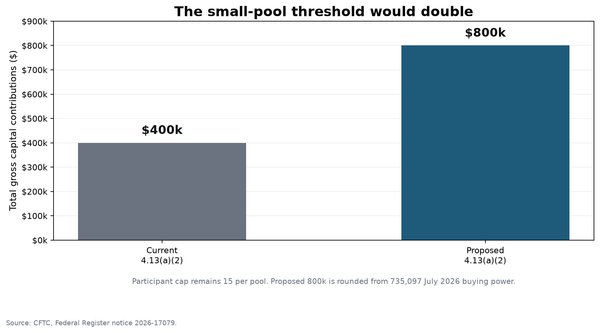
The CFTC proposes to revive a narrow RIA/QEP commodity-pool exemption and double the small-pool threshold to $800,000, while keeping investor tests and Form PF where required.
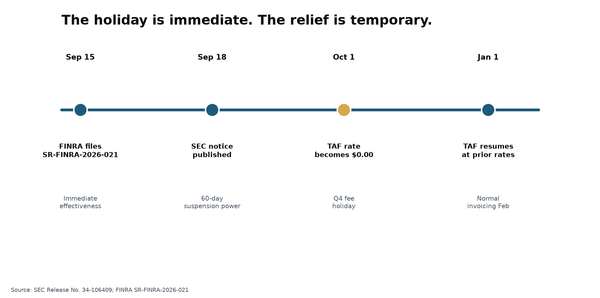
FINRA set its Trading Activity Fee to zero for Q4 2026, but the larger change is a two-year delay to scheduled fee increases. The relief is real, temporary, and concentrated.
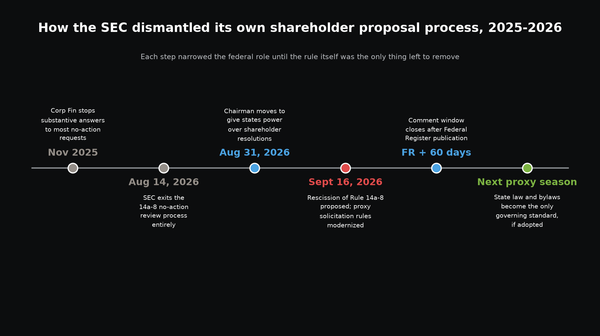
Rule 14a-8 set the federal floor for investor proposals for decades. The September 16 package would rescind it and hand the question to state law.
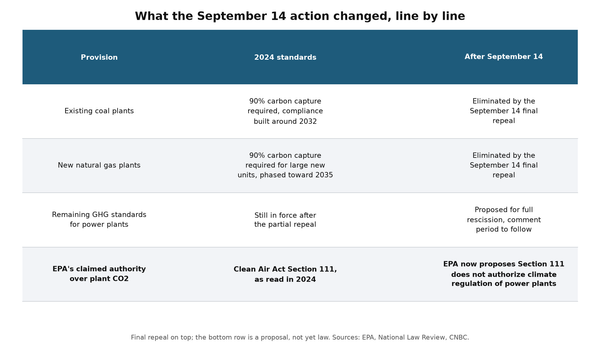
The finalized repeal kills the 2024 carbon standards. The companion proposal aims at the authority itself.
Digital Assets & Crypto
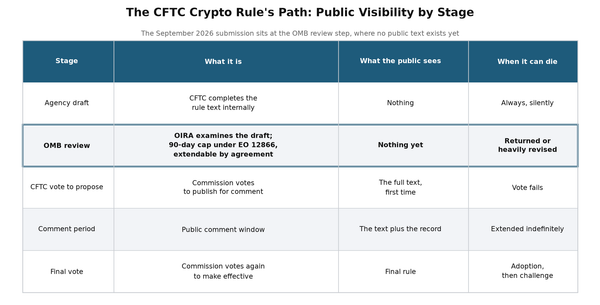
Congress stalled on the Clarity Act, so the CFTC is taking crypto market structure through the other door: executive review. The submission starts a 90-day clock, not a framework.
Labor & Transportation
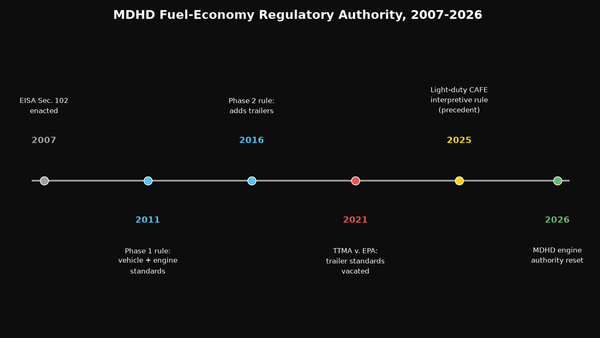
NHTSA says it never had legal authority to set fuel economy standards for truck engines, only for vehicles. The rule change is real; the relief is not, yet.
Telecom & Technology
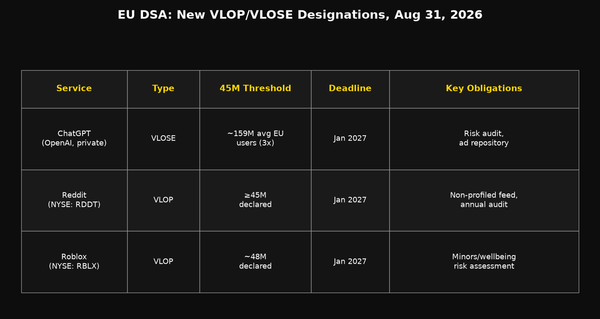
ChatGPT, Reddit, and Roblox just got tagged for the EU DSA's toughest compliance tier. Four months, real filing evidence, no invented cost figures.
Regulation
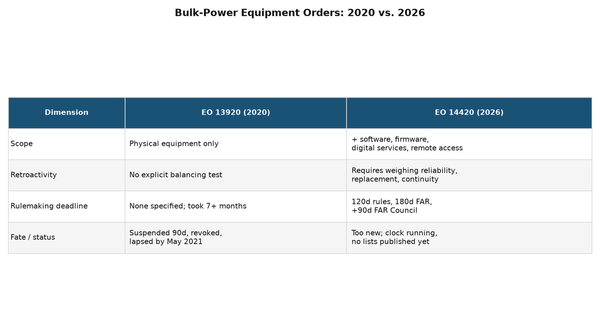
EO 14420 declares a national emergency over foreign grid equipment and software, with real deadlines. Its 2020 predecessor was suspended within a year.
Regulation
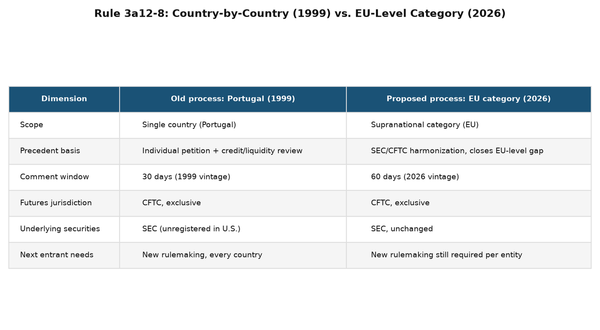
The SEC wants to add EU debt to a 1984 futures rule that has always worked country by country. Here's what changes, and what doesn't.
Regulation
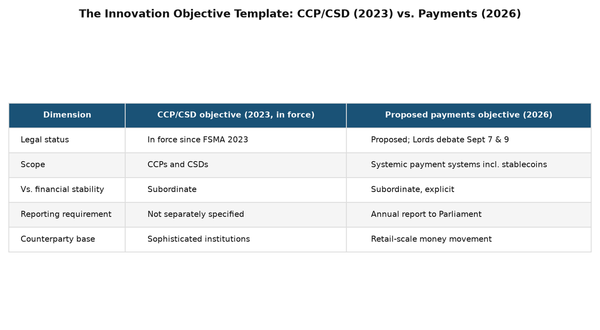
HM Treasury wants to extend the Bank of England's 2023 CCP/CSD innovation objective to payments and stablecoins. The same week, an RTGS delay showed why mandate and delivery aren't the same thing.
Trade Policy
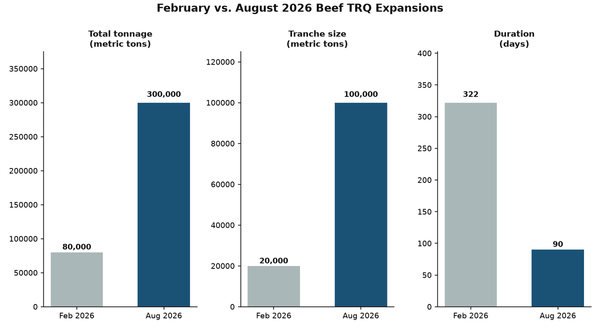
A second beef tariff-rate quota expansion in seven months looks different from the first: bigger, open to every eligible country instead of one, and built with a price-monitoring trigger that can shut it off mid-stream. Here is what would confirm this becomes a standing tool.