Trump Moves To Deregulate Space
SpaceX managed 96 launches in 2023 and has set its sights on 180 launches this year.

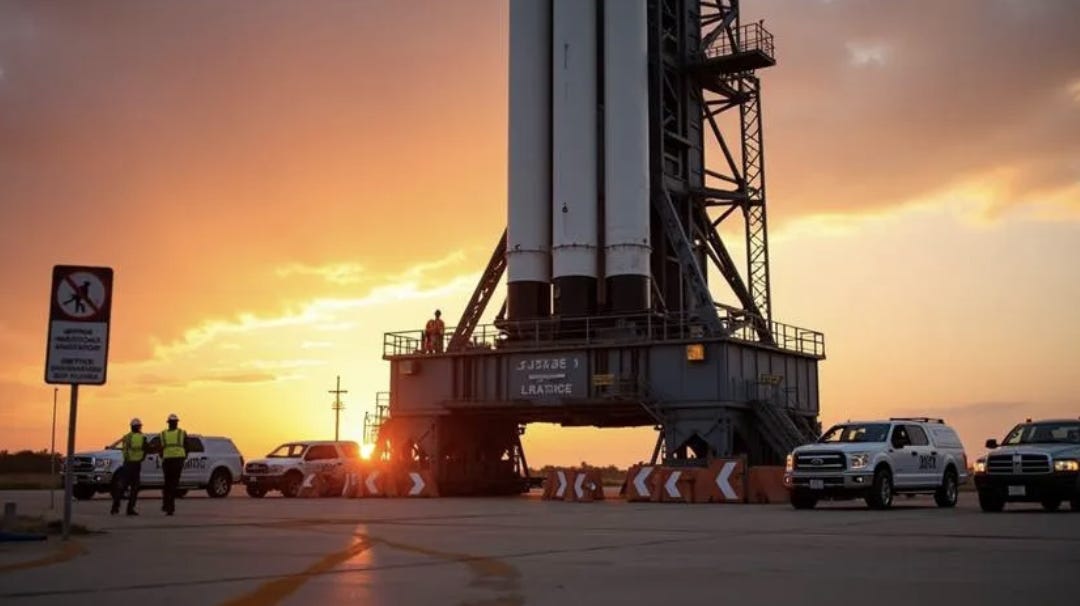
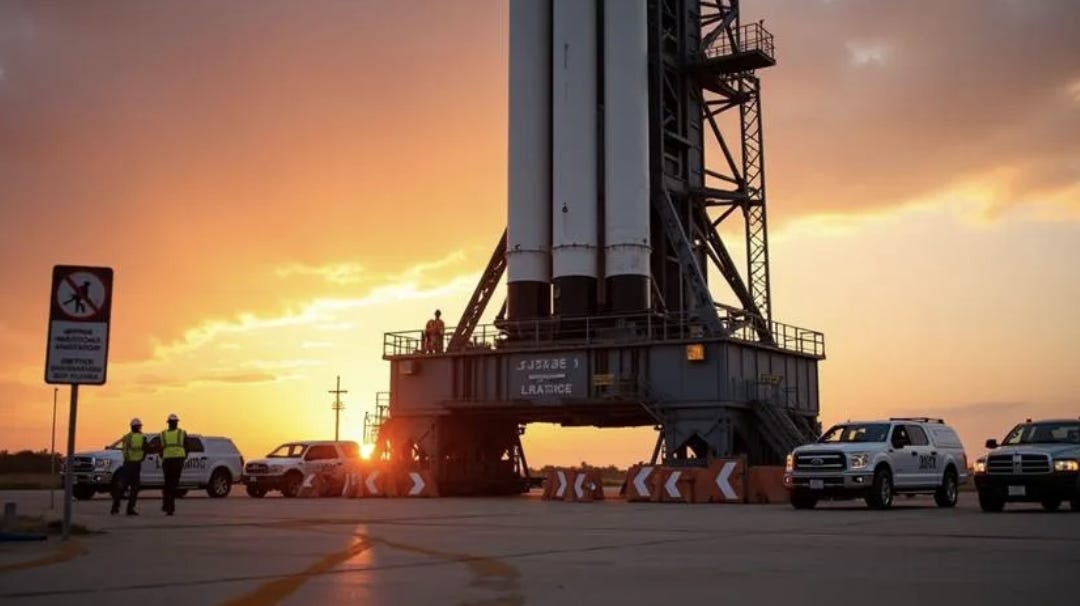
SpaceX managed 96 launches in 2023 and has set its sights on 180 launches this year. Those numbers alone tell the story of how quickly the commercial space sector is moving. Now Trump has thrown his weight behind this momentum with an executive order that takes direct aim at the regulatory framework that's been governing rocket companies.
The order directs federal agencies to take a hard look at requirements currently imposed on rocket-launching companies. I've been watching the space sector for a while now, and this represents one of the most direct attempts to strip away regulatory barriers we've seen in this industry. The order covers multiple areas, but the big focus is on environmental reviews for launch and reentry licenses - Trump wants the Transportation Department to "eliminate or expedite" these processes.
What's particularly interesting is how this reshapes the Office of Commercial Space Transportation. The order calls for replacing the career civil servant who currently heads this FAA office with a political appointee. It also creates a new position within the Transportation Department that's specifically focused on deregulation. Sean Duffy, who's serving as both Transportation Secretary and Acting NASA Administrator, gets the directive to streamline or remove the environmental reviews that have been governing launch and reentry permits.
This looks like a significant shift in how the government approaches commercial space regulation. If it works the way Trump intends, companies like SpaceX could see much faster approval processes. If it doesn't, we might be looking at some unintended consequences down the road.
What the Executive Order Actually Does
Image Source: GAO
Trump's executive order goes well beyond the broad deregulation themes. The document lays out specific timelines and mechanisms that could reshape how space companies deal with federal oversight.
Key directives to the Department of Transportation
The Transportation Secretary gets clear marching orders to for launch and reentry licenses. There's a built-in consultation requirement with the Chair of the Council on Environmental Quality, presumably to keep things legally sound. The DOT has 120 days to report back on progress."use all available authorities to eliminate or expedite environmental reviews"
The interagency coordination piece is worth noting. DOT, Defense, and NASA have 180 days to align their review processes for spaceport development and memorialize it all in a Memorandum of Understanding. That's the kind of bureaucratic streamlining that could actually speed things up if it works.
Changes to launch and reentry licensing
The order takes direct aim at – the current licensing structure for commercial launches and reentries. Part 450 was supposed to streamline things for the reusable rocket era, but it's "widely seen as having failed to meet its objective".regulatory framework 14 CFR Part 450
Here's what the order wants to change:
· Exemptions for vehicles with advanced safety systems
· Broader reliability criteria for reentry vehicles
· Removal of requirements unrelated to actual launch or reentry
Elevating the Office of Commercial Space Transportation
This office has bounced around since 1984. Originally it reported directly to the Transportation Secretary, then got moved under FAA oversight in 1995. The executive order mandates appointing an Associate Administrator for Commercial Space Transportation within the FAA as a political appointee rather than a career civil servant.
Industry groups have been pushing for this kind of elevation for years, arguing the office needs more authority and resources to handle the rapidly growing commercial space sector. Whether that translates to faster approvals or just different bottlenecks remains to be seen.
Environmental Rollbacks and NEPA Exemptions
The environmental side of Trump's space order goes well beyond the licensing changes. The directive takes aim at environmental safeguards that have been part of the space industry framework for decades.
What is NEPA and why it matters
The National Environmental Policy Act (NEPA) serves as one of the main environmental protections during space launches, requiring reviews that consider impacts on environment and human health. These reviews give opponents a legal avenue for challenging potentially harmful projects and ensure federal actions with significant environmental impacts get proper scrutiny.
Proposed for spaceportscategorical exclusions
Trump's order directs the Transportation Department to classify rocket launches as "categorical exclusions" – essentially declaring them minor changes that don't warrant environmental review. This classification would exempt spaceport development from NEPA reviews entirely. Legal experts have questioned whether rocket launches can legitimately be compared to minor landscaping changes.
The categorical exclusion approach represents a pretty aggressive move. Most rocket launches involve massive infrastructure, significant noise impacts, and potential debris fields. Treating them like routine maintenance seems like a stretch, but that's the direction the administration wants to go.
Potential impact on endangered species and habitats
The directive also instructs agencies to consider invoking from the Endangered Species Act for spaceport projects. This raises concerns for locations like SpaceX's Boca Chica facility, which sits next to sensitive habitat for protected species including the critically endangered Kemp's ridley sea turtle. Previous launches have resulted in debris raining down across the region, causing brush fires and covering homes miles away with dust.national security exemptions
The national security angle gives agencies broad discretion to bypass environmental protections. It's a powerful tool that could fundamentally change how spaceports operate near sensitive ecosystems.
State vs. federal authority under the Coastal Zone Management Act
The order targets the Coastal Zone Management Act (CZMA), which currently allows states to decide how coastlines are used. Within 180 days, the Commerce Department must evaluate states' CZMA compliance and determine whether state approvals should be revoked. This directly impacts situations like SpaceX's battle with California state regulators, who have restricted coastal launches. The order essentially gives federal authorities more power to override state environmental decisions.
This federal override approach could reshape the entire dynamic between state environmental regulators and space companies. States that have been pushing back on launches might find their authority significantly reduced.
Industry Reactions and Legal Pushback
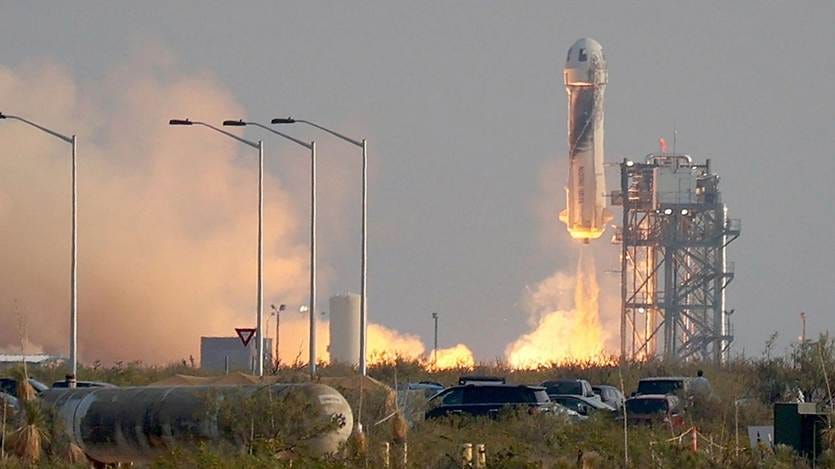
Image Source: CNN
The commercial space industry's response to Trump's order has split pretty much exactly where you'd expect it to. The big rocket companies are cheering while environmental groups are gearing up for a fight.
Support from commercial space companies like SpaceX and Blue Origin
The major players have been quick to applaud the move. environmental impact studies and FAA oversight as unnecessary barriers slowing SpaceX's Starship development. Jeff Bezos' Blue Origin stands to benefit from relaxed regulations for its space tourism ventures. FAA Administrator Bryan Bedford affirmed that "this order safely removes regulatory barriers so that U.S. companies can dominate commercial space activities".Elon Musk has repeatedly criticized
That kind of unified support from the industry isn't surprising - these companies have been dealing with what they see as regulatory bottlenecks for years.
Criticism from environmental groups and legal experts
Environmental organizations have taken the opposite view. The , arguing it "puts people and wildlife at risk from private companies launching giant rockets that often explode". Legal experts are questioning whether the administration can legally bypass environmental laws.Center for Biological Diversity labeled it "reckless"
Concerns over public health and safety
The criticism isn't just theoretical. Critics point to SpaceX's previous explosions that rained debris over Caribbean islands and forced dozens of airliners to change course. Environmental advocates highlight how sound waves from launches have killed birds and other animals.
Those aren't minor incidents - they're the kind of problems that environmental reviews are supposed to catch before they happen.
Ongoing lawsuits and regulatory challenges
Environmental organizations aren't just complaining - they're preparing for courtroom battles. Earthjustice is hiring additional attorneys beyond its existing 200 lawyers. The Center for Biological Diversity has already sued federal agencies and SpaceX over launches from Boca Chica, Texas.
This sets up what could be a prolonged legal fight between the administration's deregulation push and environmental groups determined to maintain oversight.
What This Means for the Future of Commercial Space
The ripple effects from Trump's space order are going to extend well beyond faster paperwork processing. This could reshape how the entire commercial space sector operates over the next decade.
Acceleration of launch cadence and infrastructure
U.S. launch attempts have already jumped . The executive order now aims to "substantially increase commercial space launch cadence" by 2030. Florida's Space Coast already hosted a record 93 launches in 2024 - if this deregulation works as intended, those numbers could look modest in hindsight. Streamlined spaceport development would also mean infrastructure expansion beyond the traditional launch sites we're used to seeing from just 36 in 2020 to 117 in 2023
Implications for space exploration and national security
U.S. leadership in space remains "critical to U.S. national security" and global influence. The Department of Defense has been pushing commercial space strategies to increase partnerships with private companies for national security missions. The executive order's streamlined authorization process for "novel space activities" particularly benefits emerging capabilities like orbital refueling and in-orbit manufacturing - technologies that could fundamentally change how space operations work.
Investment opportunities and market growth
Investment patterns have shifted after previous "overly optimistic forecasts," with 2023 seeing approximately $12.5 billion raised. If regulatory barriers come down as planned, private sector innovation in satellite communications, Earth observation, and space-based manufacturing could see significant capital inflows.
Risks of deregulation without oversight
The flip side is worth considering. Research suggests 1,000 private launches annually could disrupt ozone distribution. Current space regulations already lack standardized screening procedures and protocols, which means faster approvals could put both participants and the broader public at risk as launch frequency increases. The question becomes whether the benefits of rapid industry growth outweigh these potential downsides.
Conclusion
Trump's executive order represents a clear bet on deregulation as the path forward for commercial space. Companies like SpaceX and Blue Origin get what they've been asking for - streamlined approvals and fewer environmental hurdles. The question is whether this approach delivers the economic growth Trump is hoping for without creating problems down the road.
The shift from career civil servants to political appointees in key oversight roles signals how serious the administration is about this pivot. Environmental groups aren't going to take this quietly, which means we're probably looking at years of legal battles over what constitutes proper oversight versus regulatory overreach.
The numbers suggest there's real momentum behind this push. U.S. launches jumped from 36 in 2020 to 117 in 2023, and the executive order aims to push that acceleration even further by 2030. The global space economy could hit $800 billion by 2027, which creates substantial incentive for getting this right.
What's less clear is how the trade-offs will play out. Faster approvals could mean more innovation and job creation, but research suggests 1,000 annual launches might start affecting the ozone layer. The order's approach to endangered species protections and coastal management raises questions about whether economic growth is worth the environmental costs.
The space industry finds itself at a crossroads where the old regulatory framework clearly wasn't keeping pace with technological advancement. Trump's solution is to strip away much of that framework and see what happens. Whether that leads to sustainable growth or creates new problems we haven't anticipated yet remains to be seen.
The Free Markets Report is provided by Lead-Lag Publishing, LLC. All opinions and views mentioned in this report constitute our judgments as of the date of writing and are subject to change at any time. Information within this material is not intended to be used as a primary basis for investment decisions, and should also not be construed as advice meeting the particular investment needs of any individual investor. Trading signals produced by The Free Markets Report are independent of other services provided by Lead-Lag Publishing, LLC, or its affiliates, and the positioning of accounts under their management may differ. Please remember that investing involves risk, including loss of principal, and past performance may not be indicative of future results. Lead-Lag Publishing, LLC, its members, officers, directors, and employees expressly disclaim all liability with respect to actions taken based on any or all of the information in this writing.