Trucking & Transport: How 2025 Deregulation Is Reshaping a $1 Trillion Industry
Drive across the U.S.

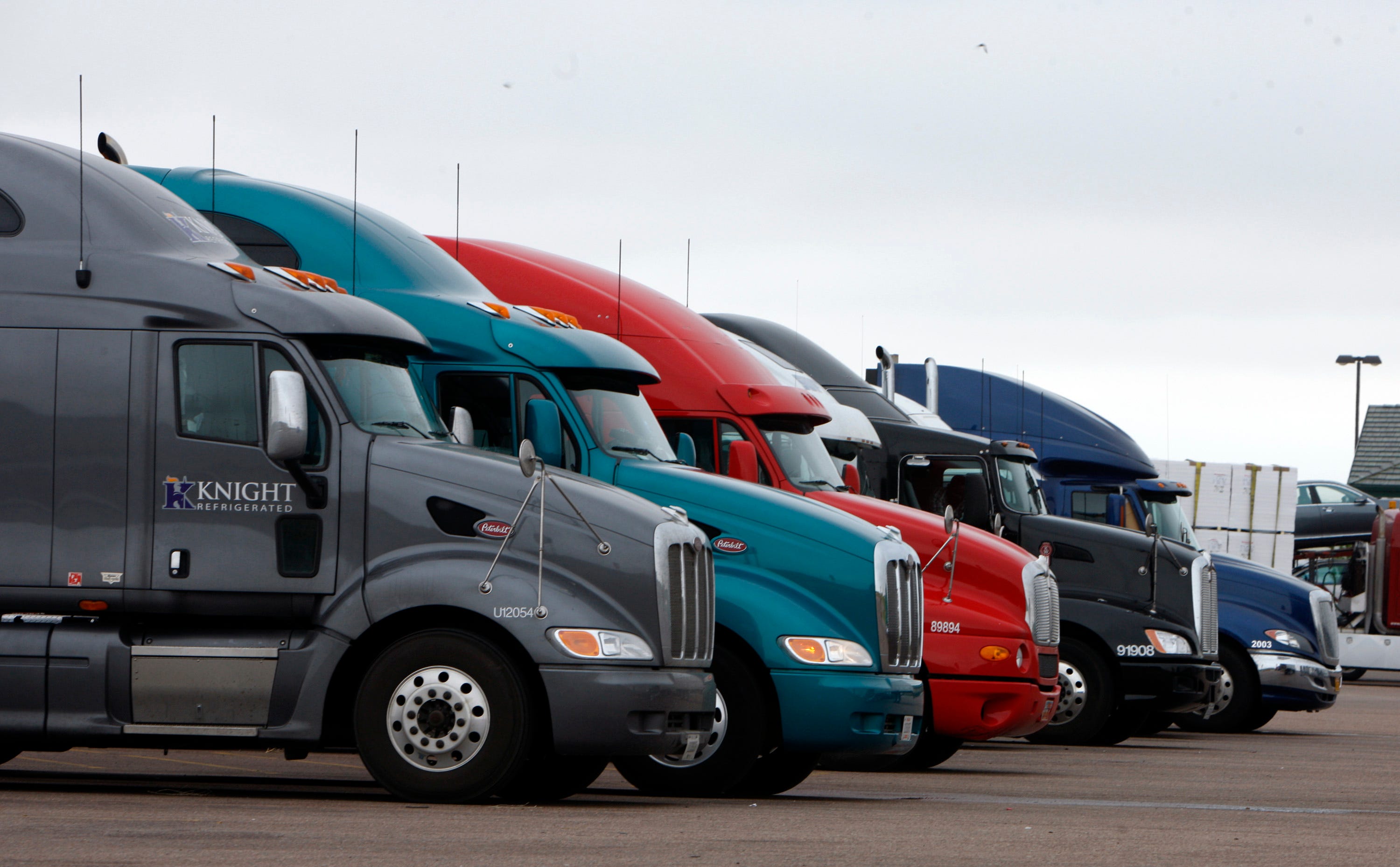
Drive across the U.S. and you’ll see the arteries of the economy in motion: freight trucks streaming down every interstate, moving nearly everything Americans buy. The trucking and transport sector now underpins more than $1 trillion in freight activity annually ¹.
In 2025, that familiar hum of diesel engines carries a new rhythm. The federal government has begun rolling back rules that have shaped the industry for decades. For carriers, shippers, and investors, it’s a reset moment—one that could redraw the economics of logistics for years.
The catalyst: a wave of deregulation
Early this year, the U.S. Department of Transportation (DOT) unveiled what analysts describe as one of the most sweeping deregulatory pushes since the early 1980s ². The Federal Motor Carrier Safety Administration (FMCSA) proposed rescinding or revising more than 50 rules governing driver hours, maintenance audits, and reporting obligations ³. Officials argued that many requirements no longer improved safety or efficiency ⁴.

The move followed months of lobbying from trucking associations that claimed compliance costs were outpacing benefits. With Washington signaling fewer new regulations ahead ⁵, markets interpreted the initiative as an effort to lift administrative drag from one of the economy’s most vital sectors.
The shape of the industry today
Trucking remains the dominant freight mode in the United States—accounting for most ton-miles and an enormous share of trade value. It’s also fragmented. The majority of carriers are small operators who often struggle under the weight of federal and state compliance. Complex documentation, mandatory electronic logging devices, and multiple overlapping safety audits have long eaten into thin profit margins.
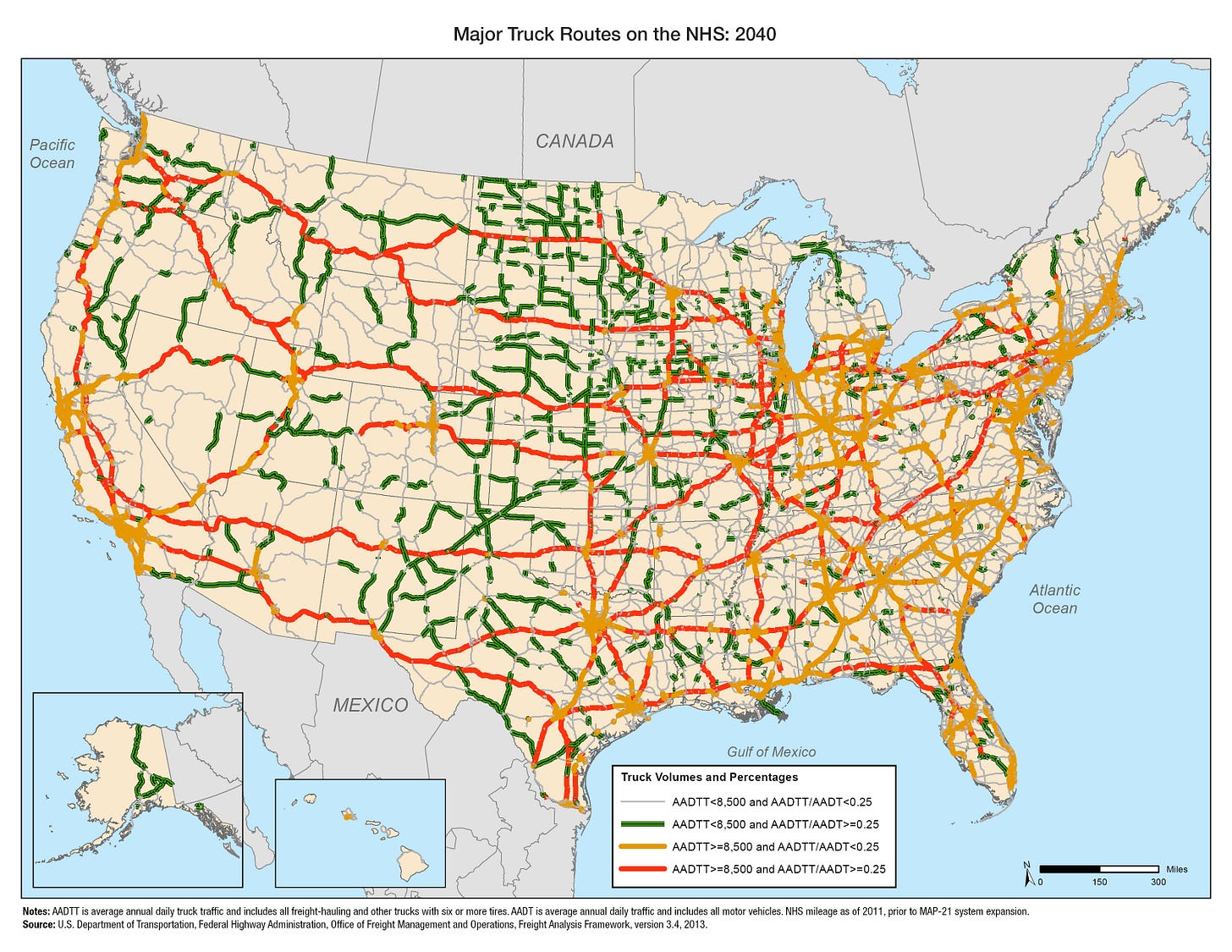
That environment gave large fleets a built-in advantage: economies of scale in paperwork, fuel management, and insurance. Smaller players faced higher unit costs and limited bargaining power with shippers. Deregulation, therefore, could flatten parts of the playing field—removing some of the structural penalties smaller firms endure.
What’s changing on the ground
Four major shifts are already visible.
1. Lower compliance costs. Removing redundant inspections and reporting rules trims overhead ³. Large carriers are redirecting those savings into technology—fleet telematics, predictive maintenance, and driver incentives—while smaller carriers gain breathing room to compete.
2. New entrants and fiercer competition. Reduced red tape has attracted private-equity-backed startups and regional fleets looking to scale quickly. More players in the market could push freight rates lower in the short run, but the pressure may reward the most efficient operators.
3. Technology adoption accelerates. With less regulatory friction, carriers can integrate automation and real-time dispatch systems more easily ⁶. That supports the broader shift toward hybrid logistics models combining truckload, less-than-truckload, and inter-modal freight.
4. Risk redistributes rather than disappears. Looser oversight introduces new exposures—particularly around safety and liability. The industry has faced a rise in “nuclear verdicts” from crash litigation ⁷. Investors and insurers alike are watching whether cost savings outweigh potential legal risks.
An investor’s lens
For markets, deregulation doesn’t just cut costs; it can rearrange entire value chains. Investors focused on transport and logistics can look at three emerging themes.
Platform leverage. Digital freight brokers and logistics marketplaces—companies that match loads with capacity—stand to benefit as more carriers come online. Their networks grow more valuable when participation expands.
Operational excellence. Large carriers that reinvest savings into fleet renewal and data analytics could see margins widen relative to less-disciplined peers. Scale, paired with efficiency, becomes the competitive moat.
Specialization. Deregulation may encourage niche operators: refrigerated transport, hazardous materials, and short-haul drayage. Specialized expertise can command pricing power even in a looser regulatory climate.
Those trends point toward greater divergence among players. The strongest fleets may use this window to consolidate, while weaker ones could be squeezed by tighter rate competition and rising insurance costs.
The fine print: risks and reversals
Every deregulatory cycle brings counterforces. Three stand out.
State friction. Some states, notably California, continue to implement strict environmental and labor standards that conflict with federal easing ⁸. A patchwork of local rules could recreate the complexity deregulation sought to remove.
Safety oversight. With fewer federal checks, the burden of maintaining safety shifts squarely to carriers. High-profile accidents could trigger political backlash or new litigation exposure.
Economic headwinds. Lower compliance costs won’t matter much if freight volumes slow. A weaker industrial cycle, falling consumer demand, or inventory destocking can compress margins despite policy tailwinds.
In short, deregulation can improve efficiency but cannot override macroeconomic gravity.
The broader economic picture
The timing of this policy shift matters. Coming after years of supply-chain bottlenecks and freight volatility, easing regulatory friction may help stabilize logistics costs. That could ripple through inflation measures, lowering delivered-goods prices and easing pressure on the Federal Reserve’s inflation fight.
Yet structural challenges remain. The driver shortage persists, electric-vehicle mandates are approaching, and infrastructure investment continues to lag. Deregulation may simplify compliance, but it cannot solve physical bottlenecks or labor dynamics on its own.
Where opportunity meets caution
For long-term investors, the key lies in discernment. A leaner regulatory framework can be bullish for logistics equities, but only when paired with strong governance and risk control. Public carriers that communicate transparently about safety and sustainability will likely attract capital at lower costs.
Meanwhile, smaller carriers that leverage technology to document compliance and performance may earn preferred-shipper status with large retailers. The new era rewards both operational discipline and digital visibility.
Private-equity and infrastructure funds are also eyeing opportunities in warehousing, trans-loading hubs, and data-driven freight networks—segments that gain relevance when trucking becomes more flexible. The capital rotation could mirror what happened in energy infrastructure when pipeline regulation loosened: efficiency surged, but only firms that managed risk well captured the upside.
Looking down the road
The 2025 deregulation drive isn’t a footnote; it’s a turning point. A $1 trillion industry rarely changes course quickly, yet a regulatory shift of this magnitude can alter the slope of its trajectory.
If implementation holds, trucking could see a multi-year productivity bump—more efficient routing, quicker asset turnover, and faster adoption of autonomous and low-emission technologies. Those trends would echo across manufacturing, retail, and construction supply chains.
Still, investors should remember that deregulation is cyclical. Political winds shift. New administrations can reinstate oversight just as swiftly as the current one removes it. The prudent stance is to position for efficiency gains without assuming permanence.
The takeaway
The trucks on America’s highways may look the same, but the rules guiding them are changing fast. For companies that adapt, the deregulated landscape offers a chance to drive leaner, faster, and further. For investors, the opportunity lies not in chasing headlines, but in understanding who can manage freedom responsibly.
As ever, the open road rewards those who keep their eyes up and hands steady on the wheel.
Footnotes
- “Regulatory Reset: How Deregulation Is Disrupting Trucking in 2025,” Logistics Management, February 2025.
- “DOT Moves to Reduce Regulatory Burden on Carriers,” Transport Topics, March 2025.
- “DOT Cuts Trucking Red Tape with 52 Deregulatory Actions,” Trans Logistics Inc., April 2025.
- Ibid.
- “How Federal Agencies Will Impact U.S. Trucking in 2025,” Fleet Owner, May 2025.
- “Digital Freight Networks Gain Traction amid Policy Shifts,” arXiv Working Paper 2506.10290, June 2025.
- “The Rise of Nuclear Verdicts in Trucking,” CargoRx Blog, July 2025.
- “Federal vs. State Divide on 2025 Trucking Rules,” CargoRx Blog, August 2025.
The Free Markets Report is provided by Lead-Lag Publishing, LLC. All opinions and views mentioned in this report constitute our judgments as of the date of writing and are subject to change at any time. Information within this material is not intended to be used as a primary basis for investment decisions, and should also not be construed as advice meeting the particular investment needs of any individual investor. Trading signals produced by The Free Markets Report are independent of other services provided by Lead-Lag Publishing, LLC, or its affiliates, and the positioning of accounts under their management may differ. Please remember that investing involves risk, including loss of principal, and past performance may not be indicative of future results. Lead-Lag Publishing, LLC, its members, officers, directors, and employees expressly disclaim all liability with respect to actions taken based on any or all of the information in this writing.