Deregulation as a Catalyst: Which Sectors Are Poised to Be Transformed?
Imagine governments cutting red tape: businesses race ahead, but at what cost?


Imagine governments cutting red tape: businesses race ahead, but at what cost? Deregulation is like lifting a brake on industry. It can unleash hidden momentum or create new headwinds. Which industries would sprint if regulators step back? This article digs into four big sectors—energy, telecom, finance, and manufacturing—to see where easing rules might change the game. No insider jargon, no empty hype. Just recent developments and what they mean for investors.
Energy: U.S. fossil fuel output surged in 2024, even as regulators tried to pause new LNG export projects. A federal appeals court blocked the Biden administration’s freeze on permit reviews, clearing the way for liquefied natural gas terminals to proceed^1. This win for producers could expand export volumes and investment, especially if environmental reviews are shortened. The same applies to pipelines and refineries—fewer hurdles mean faster buildouts. That said, market oversupply or legal challenges could still shake this momentum. Investors in oil, gas, and utilities should weigh deregulation’s upside against volatility in global prices and policy shifts.

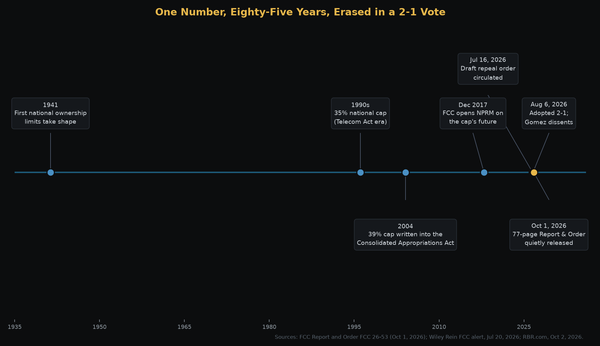
Telecom: In late 2025, the Federal Communications Commission (FCC) proposed rules to override local regulations that delay 5G tower and antenna installations^2. The agency pointed to municipal bottlenecks as a key barrier to next-gen broadband access^3. Deregulation here helps wireless carriers, infrastructure firms, and rural broadband providers. Easier siting approvals lower costs and speed up expansion. But local resistance remains. Cities and counties may sue to preserve control, creating uncertainty. For now, telecom infrastructure stands to benefit most from streamlined policy, particularly in underserved regions.
Financial Services: U.S. financial regulators have recently scaled back enforcement. The number of actions brought by agencies like the CFPB fell by over a third during the first half of 2025^4. That trend signals lighter scrutiny for banks, brokers, and fintechs. In theory, fewer fines and audits free up capital for dividends, lending, or acquisitions. If capital rules loosen further, small and regional banks could become more competitive. Still, reduced oversight raises risk. Weak compliance has led to crises before. Investors should stay alert to credit quality and market discipline.
Manufacturing: Factory investment surged in 2024, helped by subsidies and a friendlier regulatory tone. Looser permitting rules and tax incentives encouraged reshoring and automation. U.S. manufacturers announced over 240,000 new and returning jobs last year^5. Further deregulation could reduce delays in plant approvals and environmental compliance. Sectors like semiconductors and heavy machinery may gain most. Yet output depends not just on red tape, but on labor supply and end-market demand. Investors may find value in firms that control costs and adapt fast—not just those chasing incentives.
Conclusion: Lighter regulation can energize core industries, but it’s no silver bullet. Energy, telecom, finance, and manufacturing all gain in different ways. Each also faces its own risks—from legal pushback to market imbalances. Deregulation may open doors, but thoughtful investors walk through them carefully.
Footnotes
- United States Court of Appeals for the Fifth Circuit, State of Louisiana v. Biden, No. 24-10173, March 2025, https://www.ca5.uscourts.gov/opinions/pub/24/24-10173-CV0.pdf.
- Federal Communications Commission, “Accelerating Wireless Broadband Deployment by Removing Barriers to Infrastructure Investment,” FCC Fact Sheet, October 2025, https://docs.fcc.gov/public/attachments/DOC-398843A1.pdf.
- FCC Chairman Remarks, “Modernizing Siting Policies to Advance 5G,” Federal Communications Commission, October 2025, https://www.fcc.gov/document/remarks-fcc-chair-october-2025.
- Consumer Financial Protection Bureau, Enforcement Activity Report Q2 2025, July 2025, https://www.consumerfinance.gov/data-research/enforcement.
- Reshoring Initiative, 2024 Reshoring Report: Job Announcements and Investment Trends, January 2025, https://reshorenow.org/content/pdf/2024-reshoring-report.pdf.
The Free Markets Report is provided by Lead-Lag Publishing, LLC. All opinions and views mentioned in this report constitute our judgments as of the date of writing and are subject to change at any time. Information within this material is not intended to be used as a primary basis for investment decisions, and should also not be construed as advice meeting the particular investment needs of any individual investor. Trading signals produced by The Free Markets Report are independent of other services provided by Lead-Lag Publishing, LLC, or its affiliates, and the positioning of accounts under their management may differ. Please remember that investing involves risk, including loss of principal, and past performance may not be indicative of future results. Lead-Lag Publishing, LLC, its members, officers, directors, and employees expressly disclaim all liability with respect to actions taken based on any or all of the information in this writing.